
 by
by There’s a moment many women recognize: standing in front of the mirror, running a brush through hair that used to lift and move, and realizing it just doesn’t behave the same way anymore.
Fine hair after 60 has its own personality — softer, flatter, more delicate — and the styles that worked at 40 rarely deliver at 65.
The right haircut changes that. Not a drastic change, not a dramatic transformation, just a cut designed to work with finer hair instead of fighting it.
The best low maintenance hairstyles for 60 year old woman with fine hair add shape, create the look of volume, and let you walk out the door in minutes instead of standing in front of a mirror with a round brush and a prayer.
Low Maintenance Hairstyles for 60 Year Old Woman with Fine Hair
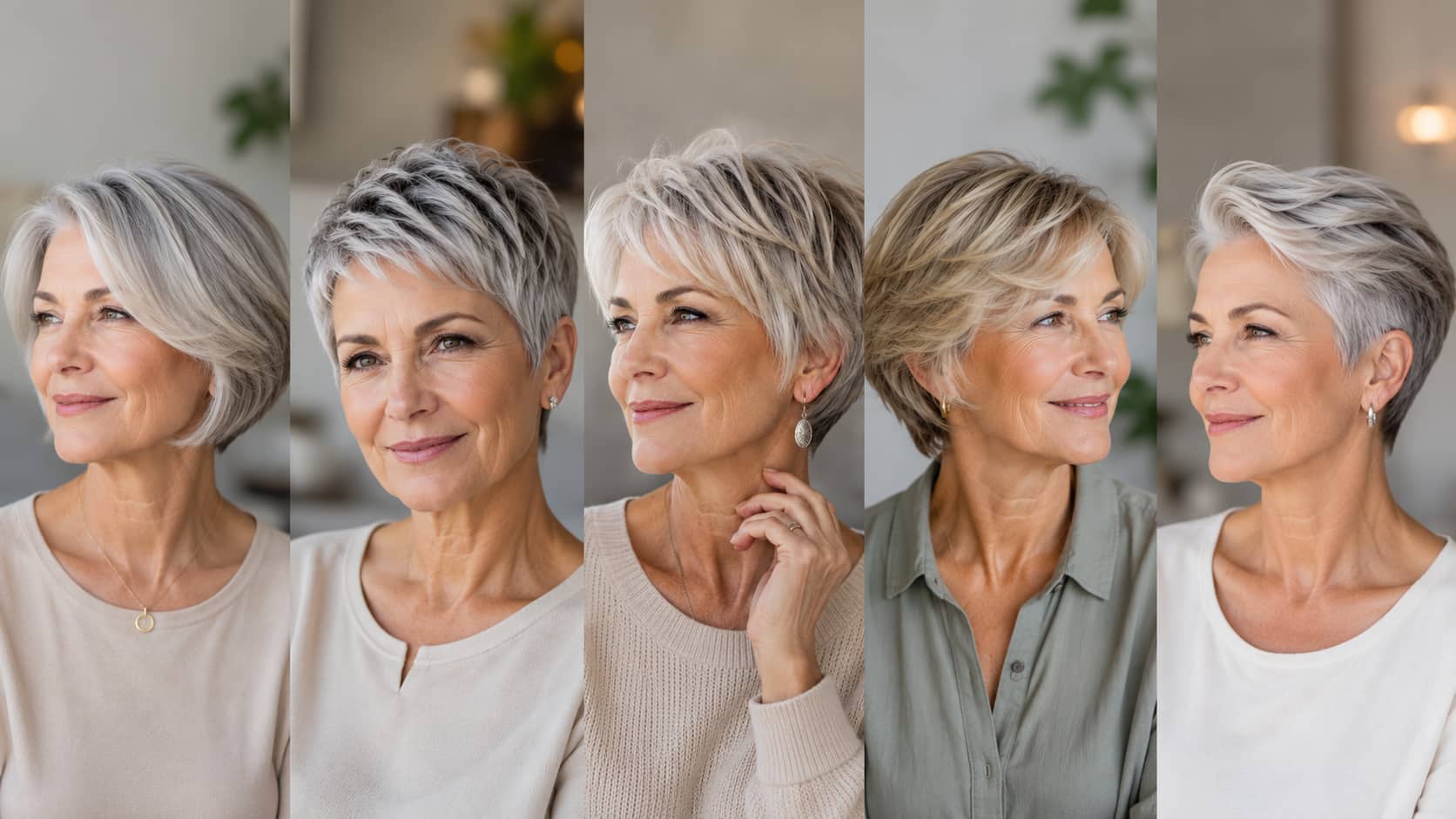
This guide walks through what actually works — cuts that grow out gracefully, styling routines that take almost no time, and the small hair care habits that make a real difference.
Why Fine Hair Changes After 60?
Hair doesn’t just turn gray with age. The strands themselves get finer, the density drops, and the natural oils that once gave hair body start to taper off.
A few things drive this:
- Hormonal shifts after menopause shorten the growth cycle, so each strand has less time to reach its full thickness.
- Density decreases gradually, meaning fewer hairs per square inch on the scalp.
- Texture shifts toward dryness, which makes hair harder to style and easier to break.
None of this is a problem to fix. It’s a new texture to work with. And the right haircut — usually something with soft layering or strategic structure — is the single biggest tool for making fine hair look fuller.
What Makes a Hairstyle Truly Low Maintenance?
A haircut is only “low maintenance” if it fits the way you actually live. For women over 60 with fine hair, the best styles share a few qualities:
- Built-in volume — the cut itself creates lift, so no teasing or heavy product is needed.
- Air-dry friendly — it looks good without a blow-dryer session.
- Graceful grow-out — it still looks intentional six weeks after a trim.
- Quick styling — five minutes or less, most days.
- Trims every 6–8 weeks — just enough to keep the shape without constant salon visits.
The goal isn’t a haircut that requires no effort. It’s a haircut that rewards very little effort.
Quick Comparison: Best Hairstyles for Women Over 60 with Fine Hair
| Hairstyle | Length | Volume | Styling Effort | Best For |
|---|---|---|---|---|
| Textured Pixie Cut | Short | High | Very Low | A bold, youthful look |
| Short Layered Bob | Short | High | Low | Lift at the crown |
| Classic Chin-Length Bob | Short | Medium | Low | Timeless, elegant shape |
| Soft Shag | Short–Medium | High | Low | Natural movement and texture |
| Shoulder-Length Layered Cut | Medium | Medium | Low–Moderate | Keeping some length |
5 Best Low Maintenance Hairstyles for Women Over 60 with Fine Hair
1. Textured Pixie Cut
A textured pixie is the shortest cut on this list and the easiest one to live with. The layers do all the work — they create volume at the crown, frame the face, and dry in whatever direction you push them. On fine hair, especially, the shorter length removes the weight that drags strands down.
Why it works:
- Layers add instant fullness
- Hair dries in minutes
- Needs only finger-styling most days
- Works with virtually every face shape
Quick styling: Work a small amount of lightweight mousse through damp hair, scrunch, and let it air dry. That’s the whole routine.
2. Short Layered Bob
The short layered bob is the cut hairstylists recommend most often for fine hair, and for good reason. The layers release movement, the shorter length keeps the silhouette from falling flat, and the shape frames the jawline in a way that feels polished without trying hard.
It’s also one of the best wash and wear haircuts for over 60 with thin hair — a quick round-brush blow-dry at the roots is often all it takes to look finished.
Why it works:
- Creates a visible body and movement
- Softens the jawline
- Easy to part on either side for a quick change
3. Classic Chin-Length Bob
The chin-length bob is the quieter, more structured cousin of the layered bob. Where the layered bob has movement, the classic version has shape — a clean line that sits right at the chin and holds its form on its own. On fine hair, that structure is what creates the appearance of thickness.
This is one of the best low maintenance hairstyles for 60 year old woman with fine hair straight, because straight hair falls into the shape naturally without much coaxing.
Why it works:
- Holds its shape between washes
- Looks intentional even with zero styling
- Works well with glasses, which many women over 60 wear
4. Soft Shag
The modern shag has had a quiet comeback among women over 60, and it suits fine hair beautifully. The cut features soft, choppy layers throughout — around the crown, through the sides, and into the ends — which create texture and movement without adding bulk in the wrong places.
It’s especially good for women with a natural wave, but it works on straight hair too. Among the best low maintenance hairstyles for seniors with thin hair, the soft shag stands out for how well it forgives a “bad hair day.”
Why it works:
- Texture hides flat spots
- Air-dries into a flattering shape
- Looks better a little messy, not worse
5. Shoulder-Length Layered Cut
For women who aren’t ready to go short, a shoulder-length layered cut is the most practical option. The layers prevent the hair from hanging in a flat sheet, and the length gives more styling flexibility — a low ponytail, a clip at the side, a half-up look for a special dinner.
This is a strong pick for layered fine hair low maintenance medium length hairstyles, because the layers do the volume work while the length still feels familiar.
Why it works:
- Adds body without losing length
- Versatile for different occasions
- Frames the face softly from the shoulders up
Hair Care Tips That Make Fine Hair Look Fuller?
A good haircut is the foundation, but small daily habits decide whether hair looks vibrant or tired.
- Use lightweight products. Heavy creams and oils are fine hair’s worst enemy — they coat the strands and pull them flat. Look for volumizing shampoos, lightweight conditioners (applied mid-length to ends, never at the roots), and root-lifting sprays.
- Wash less often. Every other day or every third day is plenty. Daily washing strips natural oils and makes fine hair look thinner faster.
- Trim on schedule. Every 6–8 weeks keeps the shape intentional. Letting fine hair grow too long between cuts is what causes that “drooping” look.
- Brush gently. A soft-bristle brush or a wide-tooth comb protects fragile strands. Aggressive brushing on fine hair leads to breakage, and breakage makes hair look thinner over time.
Quick Volume Tricks That Actually Work
Fine hair doesn’t need an arsenal of tools. A few small habits make a visible difference:
- Blow-dry upside down for 60 seconds at the roots — instant lift.
- Velcro rollers at the crown add height while you finish getting ready.
- A side part (instead of the center) gives an immediate volume boost.
- Root spray applied to damp roots before drying extends the life of a style.
These are the same techniques professional stylists use on clients with thinning hair. They work because they target the root, where lift actually starts.
Choosing a Style by Face Shape
The cut matters, but how it sits on your face matters just as much.
- Round face: Pick styles with height at the crown and length below the chin. A short layered bob with a slight angle works well.
- Oval face: Almost anything flatters an oval face. The short over 60s low maintenance hairstyles, like the pixie and chin-length bob, are both strong options.
- Square face: Soft layers and a little length at the jaw soften strong angles.
- Heart-shaped face: Chin-length and shoulder-length cuts add balance at the jaw.
A good stylist will look at face shape, hair texture, and lifestyle together before recommending a cut. Bring reference photos — they make the conversation faster and more accurate.
Common Mistakes to Avoid
A few habits quietly work against fine hair:
- Heavy styling products that promise shine but weigh strands down.
- Very long lengths that lack layering — the hair just hangs.
- Daily heat styling that damages already-fragile strands.
- Skipping trims until the shape is lost.
Small corrections in these areas are often the difference between hair that looks “fine” and hair that looks full.
FAQs
- What is the best hairstyle for a 60 year old woman with fine hair?
Layered cuts — pixie cuts, short layered bobs, and shoulder-length layered styles — work best. They add visible volume and movement, which is what makes fine hair look fuller.
- Should women over 60 keep their hair short?
Short hair is easier to manage and often looks fuller, but medium-length layered cuts work just as well for women who prefer length. The key is layering, not the length itself.
- How can fine hair look thicker after 60?
Layered cuts, lightweight volumizing products, blow-drying at the roots, and avoiding heavy creams all help. A side part adds a quick volume boost, too.
- Are layered hairstyles good for fine hair?
Yes. Strategic layering is one of the most effective ways to add movement and the appearance of density to fine hair.
- What is the easiest hairstyle to maintain for older women?
Pixie cuts and short layered bobs are the easiest. They require almost no styling, hold their shape as they grow, and dry quickly on their own.
- How often should women over 60 trim their hair?
Every 6 to 8 weeks is the standard recommendation. It keeps the shape clean and prevents split ends from traveling up the strand.
Conclusion:
Fine hair after 60 isn’t a problem to hide. It’s a texture to work with, and the right cut makes all the difference.
Whether the choice is a textured pixie, a classic bob, a soft shag, or a shoulder-length layered cut, the goal is the same: a style that looks intentional with very little effort.
The best low maintenance hairstyles for 60 year old woman with fine hair share one thing in common — they let you get ready in minutes and still feel put-together.
Bring a few reference photos to a stylist, talk through face shape and daily routine, and trust that a well-chosen cut will do most of the work for you.


