
 by
by Money management has always been an essential aspect of daily life.
Whether it involves setting aside funds for future needs or operating businesses, financial systems enable people and organizations to deal with transactions, investments, and economic development.
In the past, these systems were mainly managed via banks, financial institutions, and formal financial mechanisms. This is essentially what we understand as finance.
But, with soaring of digital technology, a totally different concept has come up known as financial technology or FinTech.
FinTech brings together financial services and modern technology to help make transactions quicker, more convenient, and readily accessible.
At present, finance and FinTech are interrelated and crucial to the world economy.
Knowing what sets them apart allows one, be it a person, a working professional, or an enterprise, to adjust effectively to the continuously changing financial environment.
FinTech vs Finance
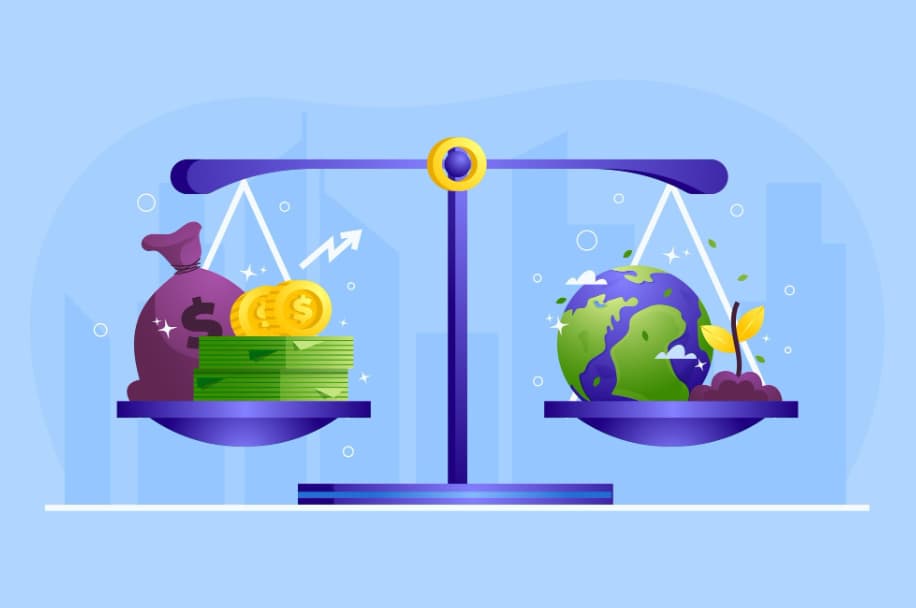
Besides, learning a fintech course has become the choice for a lot of professionals, and checking out the best fintech courses is helping them not lose their edge in this quickly developing field.
What Is Finance?
Finance encompasses the conventional way of money management.
This covers banking, investment loans, insurance, and financial planning activities.
Such financial services were primarily handled by financial institutions like banks, credit unions, and investment firms.
Key aspects of traditional finance include:
- Banking services such as savings accounts and loans
• Investment management and financial advisory services
• Insurance and risk management
• Corporate finance and capital management
• Financial regulations and compliance
Traditional finance has built strong trust over time, but it can sometimes involve slower processes and paperwork-based procedures.
What Is FinTech?
Financial technology or FinTech means the use of modern technologies to enhance, simplify, and automate financial services.
It is about introducing digital transformation to sectors largely controlled by conventional banks and other financial institutions.
The main goal of FinTech is to deliver financial services that are faster, easier, and more delightful to customers.
A lot of the work in this area is led by new businesses and tech firms that come up with innovative digital financial products.
Common areas where FinTech is widely used include?
- Mobile payment applications
• Digital banking platforms
• Online investment platforms
• Peer-to-peer lending platforms
• Digital wallets and contactless payments
If you are a professional and interested in this fast-growing sector, a fintech course can be an effective way to gain knowledge about financial technology systems, digital payments, and cutting-edge financial innovation.
A lot of colleges are now presenting some of the best fintech course materials, integrating financial knowledge with technical skills.
Key Differences Between FinTech and Finance
Although both FinTech and finance deal with money and financial services, the way they operate is quite different. The main difference lies in how technology is used to deliver financial solutions.
| Aspect | Finance | Fintech | ||
| Definition |
|
Use of technology to deliver financial services | ||
| Service delivery | Physical banks and structured financial systems | Digital platforms and mobile applications | ||
| Customer interaction | Often involves branch visits and paperwork | Mostly online and app-based | ||
| Innovation speed | Slower due to regulations and legacy systems | Faster due to technology-driven development | ||
| Accessibility | Limited by location and banking hours | Accessible anytime through digital devices |
Industry Impact of FinTech
The rise of FinTech has created significant changes across the financial industry.
Instead of replacing traditional finance entirely, FinTech often works alongside it to improve efficiency and accessibility.
Some of the major impacts include:
- Faster digital transactions and payment systems
• Greater financial access for people without traditional banking services
• Improved customer experiences through mobile platforms
• Increased innovation within the financial sector
• New career opportunities in financial technology
Due to the ongoing transformation of financial services by technology, experts who understand both finance and technology are increasingly in demand.
Hence, a lot of students have turned to a fintech program to obtain hands-on training as well as knowledge of digital finance ecosystems.
Top fintech course providers emphasize mainly digital banking, financial analytics, and tech-enabled finance solutions as their core subjects.
Conclusion:
Finance and FinTech are both vital components of the modern economy, yet they have different modes of operation.
Conventional finance offers well-organized frameworks, legal requirements, and a sense of security that has been underpinning financial markets for a long time.
In contrast, FinTech is the source of fresh ideas, rapid developments, and user-friendliness mainly via digital channels.
In real life, individuals usually deal with two things at the same time. For example, a bank may still maintain people’s financial accounts that can be accessed digitally via apps anytime and anywhere.
Since technology keeps shaping financial systems, the shortage of people who are well-versed in both areas is bound to be felt strongly.
One can take the best fintech courses to find out if they want to acquire the necessary skills to thrive in this changing sector.
Understanding the relationship between finance and FinTech is not only useful for professionals but also for anyone who wants to navigate the modern financial world with confidence.
Also Check:


